
Choosing the ACCA (Association of Chartered Certified Accountants) qualification opens doors to a prestigious and globally recognized career in accounting and finance. However, for many graduates and professionals, starting the journey from scratch can seem daunting. This is where ACCA exemptions come into play – a game-changer that allows you to fast-track your path to qualification. Let’s delve into everything you need to know about ACCA exemptions and how you can leverage them.
What are ACCA Exemptions
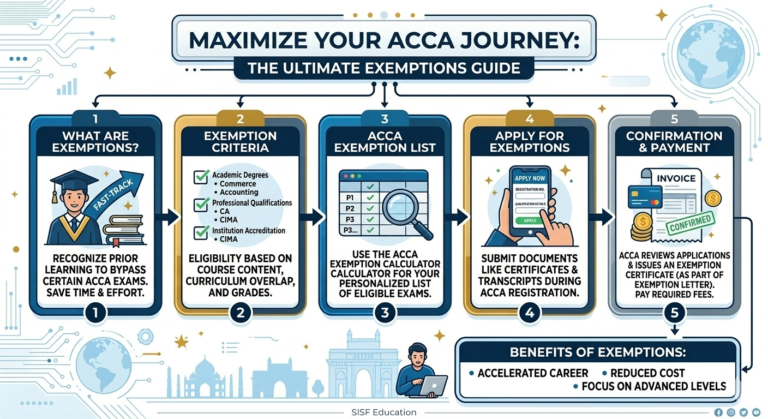
ACCA exemptions are a benefit that allows students to skip certain ACCA exams based on their previous academic or professional qualifications. In simple terms, if you have already studied similar subjects in your degree or course, you don’t need to appear for those ACCA papers again.
These exemptions help reduce the total number of exams, saving both time and effort while helping you complete the ACCA qualification faster.
Example: If you have completed a B.Com degree, you may receive exemptions from Applied Knowledge level papers such as Business Technology or Financial Accounting. This means you won’t need to start from all 13 ACCA exams and can directly focus on the remaining papers.
ACCA Exemption Criteria
Determining your eligibility for ACCA exemptions is crucial. ACCA assesses exemptions based on your prior learning, considering factors such as:
- Academic Qualifications: Relevant university degrees (e.g., in accounting, finance, business) can lead to significant exemptions. ACCA for graduates is a common pathway for fast-tracking.
- Professional Qualifications: Holding recognized professional accounting qualifications can also grant you exemptions.
- Institution Accreditation: The accreditation of the institution where you obtained your qualification can also be a factor.
It’s vital to note that exemptions are not guaranteed. ACCA carefully reviews each application and qualification to ensure consistency and maintain the rigorous standards of the program.
ACCA Exam Structure
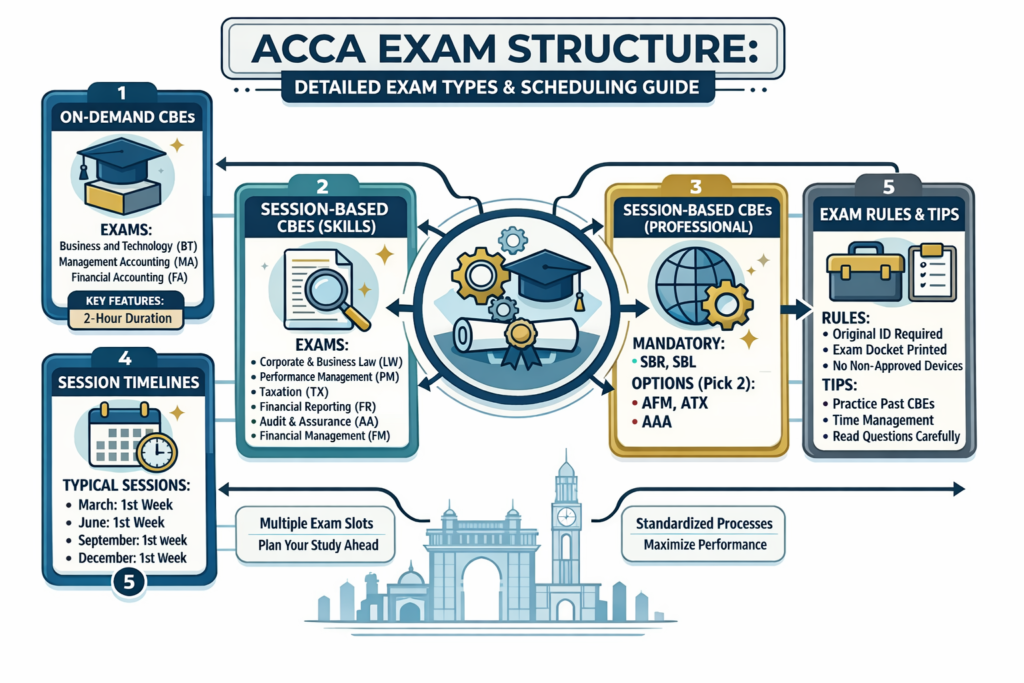
The ACCA qualification consists of 13 exams divided into three levels.
Exploring the ACCA Exemption List
Curious about which ACCA exams you might be exempt from? While ACCA doesn’t publish a static “exemption list” applicable to everyone, they offer a powerful tool to help you explore your possibilities.
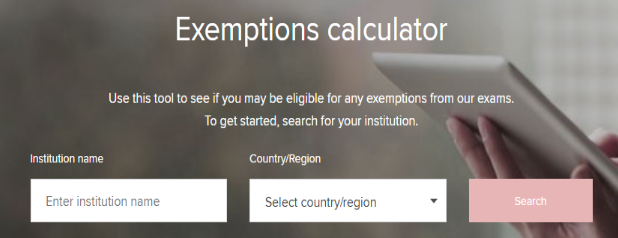
The key to unlocking your tailored ACCA exemption list is ACCA’s online exemption calculator. By inputting your qualifications and the institution where you obtained them, the calculator provides an estimate of the exemptions you may be eligible for. This gives you a clear indication of which ACCA exams you might skip.
How to Apply for ACCA Exemptions
Once you’ve used the calculator and have a good idea of your potential exemptions, the application process is relatively straightforward.
- Register with ACCA: Start by registering as an ACCA student on the official website. To make the process simple and error-free, join SISF Education our experts guide you step by step with registration, exemptions, and a clear study plan to fast track your ACCA journey.
- Submit Your Application: During the registration process or afterwards, you can apply for exemptions by uploading copies of your official academic transcripts and certificates.
- Payment: You will need to pay an exemption fee for each exam you successfully claim.
- Wait for Confirmation: ACCA will process your application and notify you of the outcome.
ACCA Exemption Guide - Documentation and Expert Support
You do not need a separate ACCA exemption certificate to apply; instead, ACCA evaluates your eligibility based on official documents like your university transcripts and degree certificates, so it’s important that these accurately reflect your academic achievements. By strategically using ACCA exemptions, graduates and professionals can significantly reduce the number of exams, saving both time and costs while focusing only on the remaining papers.
To make the most of this opportunity, start by checking your eligibility through the ACCA exemption calculator and understand how many papers you can skip. For better clarity and a hassle-free process, institutes like SISF Education provide expert guidance—from ACCA registration and exemption claims to personalized exam planning—helping you complete your ACCA qualification faster and more efficiently.
Conclusion
ACCA exemptions are a powerful advantage for Indian graduates who want to complete ACCA faster and build a global career in accounting and finance. By recognizing your previous academic knowledge, ACCA allows you to skip relevant exams, reduce study time, and focus on higher-level professional skills. Whether you come from a B.Com, MCom, MBA, or CA background, understanding your ACCA exemption eligibility and applying it strategically can significantly accelerate your journey.
To ensure you claim the maximum exemptions and avoid mistakes in the process, expert guidance is essential. If you are searching for ACCA coaching in Indore, SISF Education is a trusted institute that helps students with accurate exemption evaluation, smooth registration, and a clear study roadmap.
With experienced faculty, structured preparation, and personalized mentorship, SISF Education ensures you don’t just start ACCA but complete it faster and successfully, building a strong global finance career.
Frequently Asked Questions
How many exams are in the ACCA qualification?
There are 13 exams in total, divided into three levels: Applied Knowledge (3), Applied Skills (6), and Strategic Professional (4). You must also complete the Ethics module and 36 months of practical experience.
Are ACCA exams online or paper-based?
All ACCA exams are now Computer-Based Exams (CBE). Levels 1–3 are taken at licensed centers or via remote proctoring, with results for the Knowledge level available instantly.
Can Indian graduates get ACCA exemptions?
Yes. Indian B.Com graduates typically receive 4 exemptions, while Chartered Accountants (CAs) can get up to 9 exemptions, allowing them to skip the Knowledge and Skills levels entirely.
Which ACCA level is the hardest to pass?
The Strategic Professional level is considered the most challenging as it requires advanced analytical skills. In the Skills level, Performance Management (PM) and Audit and Assurance (AA) often have the lowest global pass rates.
Which is the best institute for ACCA coaching in India?
There are many institutes offering ACCA coaching, but SISF Education is emerging as a popular choice due to its personalized mentorship, expert faculty, and strong focus on helping students maximize exemptions and clear exams efficiently.
Do I need coaching for ACCA or can I self study?
While self study is possible, SISF Education helps students with expert coaching, study plans, and strategies to improve pass rates.
How does SISF Education help ACCA students?
SISF Education supports students at every step, including registration, exemptions, coaching, and exam strategy for faster success.