
If you have a passion for finance, you don’t have to wait until graduation to build a global career. Starting ACCA after 10th via the Foundation in Accountancy (FIA) route is a strategic move that builds core concepts at a manageable pace.
For 11th and 12th Commerce students, this is an ideal “Early Mover” strategy because ACCA subjects like Financial Accounting and Business Studies overlap significantly with your school syllabus. By dedicating consistent, limited hours to ACCA alongside your studies, you strengthen your Board exam understanding while building a dual professional foundation.
This path allows you to qualify as a global professional by your early twenties, putting you years ahead of your peers without unnecessary pressure.
| Feature | 📘After 10th (FIA Route) | 🎓After 12th (Direct) | 🏛️After Graduation |
|---|---|---|---|
| Primary Entry Route | Foundation in Accountancy (FIA) | Applied Knowledge Level | Applied Skills Level |
| Eligibility Criteria | No minimum marks required | Min. 65% in Math/Accounts & English | Completion of B.Com / BBA / M.Com |
| Academic Synergy | High: Directly overlaps with 11th & 12th Commerce | Moderate: Complements college subjects | Lower: Mostly a revision of past topics |
| Exemptions Potential | 3 Papers (after FIA Diploma) | Usually 0 (Fresh Start) | 4 – 9 Papers (based on degree) |
| Study Pressure | Low: Spread over 5–6 years (1 paper/quarter) | Moderate: Balanced with Degree | High: Compressed into 1–2 years |
| Age of Qualification | 21 – 22 Years (Global Affiliate) | 23 – 24 Years | 25 – 26 Years |
| Career Headstart | 3–4 Year Lead over peers | Standard Professional Path | Late Professional Entry |
| Earning Potential | Reach Senior Manager by age 26 | Reach Asst. Manager by age 26 | Starting Entry-Level at age 25 |
How to Join ACCA After 10th: The FIA Route
Since the standard entry requirement for the ACCA Qualification usually involves completing 12th grade (with specific marks in Accounts and English), students coming out of 10th grade enter through the Foundation in Accountancy (FIA) route.
The FIA is a suite of awards from ACCA designed to provide a solid base in accounting and business. Once you complete the Diploma stage of the FIA, you automatically transfer into the main ACCA Qualification with exemptions from the first three papers.
| Stage | Exams / Modules | Qualification Earned | Approx. Timeline |
|---|---|---|---|
| Step 1 Introductory |
FA1 (Recording Transactions) & MA1 (Management Information) | Introductory Certificate in Financial & Management Accounting | 3 – 6 Months |
| Step 2 Intermediate |
FA2 (Maintaining Records) & MA2 (Managing Costs) | Intermediate Certificate in Financial & Management Accounting | 3 – 6 Months |
| Step 3 Diploma |
FBT (Business & Tech), FMA (Mgmt Accounting), FFA (Financial Accounting) | Diploma in Accounting & Business | 6 – 9 Months |
| Step 4 Transition |
Completion of the Diploma Stage | Automatic Transfer to ACCA Applied Skills — 3 Exemptions Granted | — |
| Step 5 Professional |
Remaining 6 Skills Papers + 4 Strategic Papers | ACCA Affiliate Status | 2 – 3 Years |
Steps to Start Your Journey with SISF Education
To ensure a smooth transition into professional finance, SISF Education provides a structured roadmap for 10th grade students:
- Register with ACCA via SISF: Sign up as a student under the Foundation in Accountancy (FIA) pathway. SISF assists with the registration process to ensure you are on the right track from day one.
- Complete Introductory & Intermediate Certificates: These initial modules cover the essentials of financial and management accounting, building your confidence in core concepts.
- Complete the Diploma in Accounting and Business: This stage consists of three key exams:
- FBT: Business and Technology
- FMA: Management Accounting
- FFA: Financial Accounting
- Transition to ACCA: Once you pass these three exams, you move directly into the ACCA Applied Skills Level, effectively skipping the first three papers of the main qualification.
Strategic Path: Choosing the Right Stream for ACCA After 10th
1. The Commerce Route: The “Fastest” Path
Choosing Commerce for 11th and 12th is the most logical step if you are certain about a career in Finance.
- The Overlap: Your school subjects (Accountancy, Business Studies, and Economics) act as a “foundation” for the initial ACCA papers. For example, what you learn in 11th-grade Journal Entries is exactly what you need for the ACCA Financial Accounting (FA) paper.
- The Exemption Advantage: If you continue with Commerce and complete a B.Com or CA Inter later, you can claim up to 5-6 exemptions. However, starting right after 10th via the FIA (Foundation in Accountancy) route while in the Commerce stream makes the learning curve very smooth.
2. The Science/Arts Route: The “Alternative” Path
Can you take Science or Arts and still do ACCA? Absolutely.
- Science Students: Many of my most successful students were Science toppers. Why? Science builds strong analytical and logical thinking skills that are crucial for the Strategic Professional level of ACCA. If you take Science but realize your heart is in Finance, you simply start with the Foundation in Accountancy (FIA). This “bridge” program teaches you the basics of debits and credits from scratch.
- Arts Students: If you have a background in Humanities but want to move into Global Business or Management Accounting, ACCA is perfectly accessible. The focus here will be more on the “Business” and “Law” aspects of the qualification.
Stream Comparison: ACCA Suitability
| Feature | 📚Commerce Stream | 🔬Science Stream | 📖Arts/Humanities |
|---|---|---|---|
| Syllabus Overlap | High (70-80% in basics) | Low (New concepts) | Low (New concepts) |
| Learning Curve | Smooth & Intuitive | Analytical & Logical | Qualitative & Strategic |
| Entry Route | Direct or FIA | Usually FIA Route | Usually FIA Route |
| Mentor Verdict | Best for early completion. | Great for analytical roles. | Good for management focus. |
The Role of SISF in Your ACCA Journey
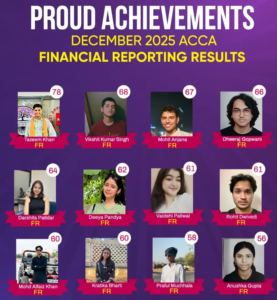
Choosing to pursue ACCA after 10th is more than just an academic decision; it’s a fast-track to a prestigious global career. By utilizing the FIA route, you bypass the traditional waiting period, allowing you to gain professional qualifications while your peers are still navigating high school.
With the right guidance from SISF Education, the transition from 10th grade to international accounting is seamless. If you are looking for the best ACCA coaching in Indore, SISF Education offers a specialized environment where local students can access world-class training and mentorship. You gain the dual advantage of time and expertise, ensuring you enter the job market as a qualified professional years ahead of the competition.
Frequently Asked Questions
1. Is 10th grade too early to start ACCA? Is it difficult?
Not at all; it is actually the ideal time. Deciding after 10th gives you a 2-year headstart. You begin with the Foundation in Accountancy (FIA) route, which is specifically designed to ease students into the curriculum by starting with the absolute basics. It’s like learning to drive in a simulator before hitting the highway—it builds confidence without the high pressure of professional-level exams.
2. Can I study for my 11th/12th Boards and ACCA together?
Yes! ACCA is highly flexible. Since foundational exams are On-Demand CBEs (Computer Based Exams) and professional exams are held quarterly, you can plan your papers around your school calendar. Far from hindering your performance, ACCA subjects like Financial Accounting (FA) and Management Accounting (MA) actually help you score better in school Accountancy because your conceptual clarity becomes much deeper than that of your classmates.
3. What is the FIA route, and what happens after I finish it?
The FIA (Foundation in Accountancy) is a suite of awards for those starting without 12th-grade marks. You study subjects like Business and Technology (FBT), Management Accounting (FMA), and Financial Accounting (FFA). Upon completion, you receive a Diploma in Accounting and Business and are automatically promoted to the main ACCA Qualification with exemptions from the first three papers (Knowledge Level).
4. How many hours per week are required? Is it suitable for "average" students?
For a school student, 8–10 hours a week (about 1.5 hours a day) is usually enough to clear one paper every 3–4 months. ACCA is designed for competence, not just “toppers.” Its flexible passing system means if you fail a paper, you only retake that specific paper, not the whole group. This ensures that even “average” hardworking students can become global professionals.
5. Do I need to be a "Maths Genius" or have strong English skills?
No. You don’t need advanced calculus or poetic English. If you understand basic arithmetic (addition, subtraction, percentages) and can communicate business concepts clearly, you are good to go. ACCA actually helps improve your professional communication and analytical skills as you progress.
6. Do I still need a college degree (B.Com/BBA) alongside ACCA?
While ACCA provides immense stability, we strongly recommend pursuing a graduation degree alongside it. Most global companies and visa processes prefer “Degree + Professional Qualification.” Since ACCA offers a pathway to a BSc in Applied Accounting from Oxford Brookes University (UK), you can actually earn a world-class degree while completing your ACCA journey.
7. Can I really become a qualified ACCA by age 21 or 22?
Absolutely. By starting after 10th, you can finish your exams by the time you graduate college. This puts you 3 years ahead of those who start after their degree, giving you a massive salary advantage in Big 4 firms and MNCs. In 2026, being “Young and Qualified” is the ultimate competitive edge.
8. What if I don't have a Commerce background? Should I switch streams?
You can do ACCA even if you are from a Science or Arts background via the FIA route. However, switching to Commerce makes life easier as the syllabi complement each other. If you love Science but want a Finance career, you can keep Science as your base and do ACCA as a parallel professional track.
9. Can I switch careers later, or does failing affect my options?
ACCA skills (financial analysis, strategic thinking) are highly transferable to consulting, data analytics, or an MBA. Failing an exam is common and does not ruin your career or college options; it is simply a part of the professional learning curve. ACCA allows multiple attempts so you can analyze your mistakes and improve.